


Christine: ‘Some children need more time’.
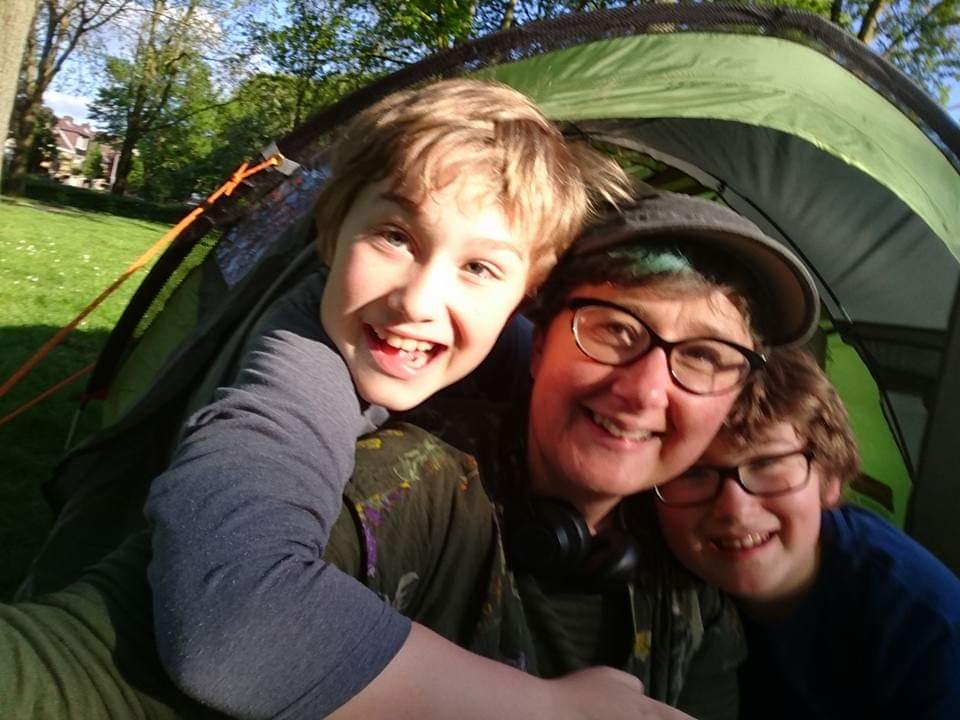
The Sons Leon (15) And Reuben (13) Of Christine Jones Were Born In England. They Are Now In Secondary Education Here, But It Was Not Easy To Find A Suitable Place For Them. ‘Everyone Learns Differently And You Simply Cannot Force My Children To Gain Knowledge.’
‘Do you know that scene from Little Britain?,’ asks Christine. She refers to the TV series where a lady with sleek dark hair and horn-rimmed glasses speaks to hopeful customers and always says at the key moment: ‘computer says no.’ It perfectly shows how Christine felt when the primary school could not find a suitable place for her two sons.
He is a very social and creative child, but at some point he completely shut down.
Gifted
‘As if there was a huge barrier.’ Her two sons are gifted and were diagnosed with autism and adhd. ‘Because of these disorders, the primary school wanted to apply for a Declaration of Admissibility for special education. I did not understand that, because that education is for children with very different problems.’ Christine did not accept this. ‘I filed a complaint with the disputes committee about the Partnership Tailored Education. But that also led nowhere, because I was told that the staff did their work well within their limits.’ It made Christine discouraged. ‘Isn’t it the Partnership Tailored Education’s job to offer the child the right education? It is so bureaucratic. The child should come first but that did not happen.’
School for Personal Education
Her eldest son Leon started just before the lockdown at the School for Personal Education in Utrecht. The school, which later became controversial, seemed ideal with its focus on small scale. But it went differently. ‘Leon is very academic and was a loner there. He wanted to learn and was very mature in that effort. It was very frustrating that he did not really fit in that class. And then the lockdown came on top.’ The school made many mistakes according to Christine. ‘It was so chaotic. They had no plan for digital lessons. As a 13-year-old he got 200 emails in the first weeks. The teachers had no idea how to best give assignments and hold video calls.’ The limit was quickly reached. ‘Other students started sharing horrible videos during lessons. It became clearer that Leon was stressed out. I contacted the school but got no help. I had to find a solution myself.’
At the same time, her youngest son Reuben was in group 7 of special education cluster 4. ‘He is a very social and creative child, but at some point he completely shut down.’ This showed mainly in his behavior. ‘He wore his headphones and hood and lived in his own world. He was in a class with children who all had very different problems. There was no individual support.’ The results lagged behind. ‘He should be able to do pre-university education but according to the tests he was at the level of Practical education track. Reuben only does something if he is interested. Otherwise he shuts down. You cannot force him to learn something.’
I enrolled the boys at a school for democratic education. There are no mandatory subjects. Children sign up for lessons if they are interested. We were in lockdown and I thought: we have nothing to lose.
Democratic education
The last thing gave Christine an idea. ‘I enrolled the boys at a school for democratic education. There are no mandatory subjects. Children sign up for lessons if they are interested. We were in lockdown and I thought: we have nothing to lose.’ The boys could start right away for a trial month. ‘It was a success. They made friends right away.’ The teaching method appealed to Christine immediately. ‘Learning is not linear. You learn better when you are really ready. At the start of each period there is a lesson market and students can sign up for lessons. From learning to play a musical instrument to regular subjects.’
Her youngest son Reuben is happy there. ‘He is in domain 2 and the education really focuses on interests without focusing on exams. Now he can still be a child. Actually he spends a lot of time on computer games like Minecraft or Dungeons and Dragons. That is also a learning moment for him: planning, prioritizing, problem solving, communication, strategy and creativity – it all comes back. He also has a close group of friends at school and enjoys going there.’ At a democratic school, students can stay until they are 22 years old. There is no guarantee of a diploma. Students only move to the next step when they are ready. ‘Leon was ready for the next step and he is doing well too. He is in domain 3 and makes plans to get his pre-university diploma. He does not take subjects at the same time, but really focuses on one subject per exam. He wants to go to university eventually, but he does not know yet what he wants to become.’
Advice
What advice can Christine give other parents? ‘Look at your child. What does he need? You find out sooner what does not work than what does. But don’t get discouraged and keep looking until you find a solution. It is not about numbers and diplomas. The most important thing is that your child is in a safe place.’ According to her, it is about the right priorities. ‘I don’t say this education is right for every student. But it is definitely something for parents to try. Social identity is important for a teen, he wants to know who he is. That social and emotional development is more important than a diploma.’ She has a clear message for politicians. ‘Make more forms of education inclusive. This education costs us about 5000 euros per year. Why is this education not included in the system? Every child learns differently. Some children just need more time.’
Christine Jones’ two sons
About Staat van de Ouder
Staat van de Ouder is an annual publication by Ouders & Onderwijs about what parents think of Dutch education. Every two years we do broad representative research on a current theme. The 2022 Staat van de Ouder focuses on the transition from primary school to secondary school.
Parent panel
If you want to share your opinion on important issues in education, you can sign up for the Landelijk Ouderpanel. We regularly do research among parents where you can have your say.

Sign up for our bi-weekly newsletter!
Receive the latest news, tips and experiences.