


The task to organize the transition to secondary education better.
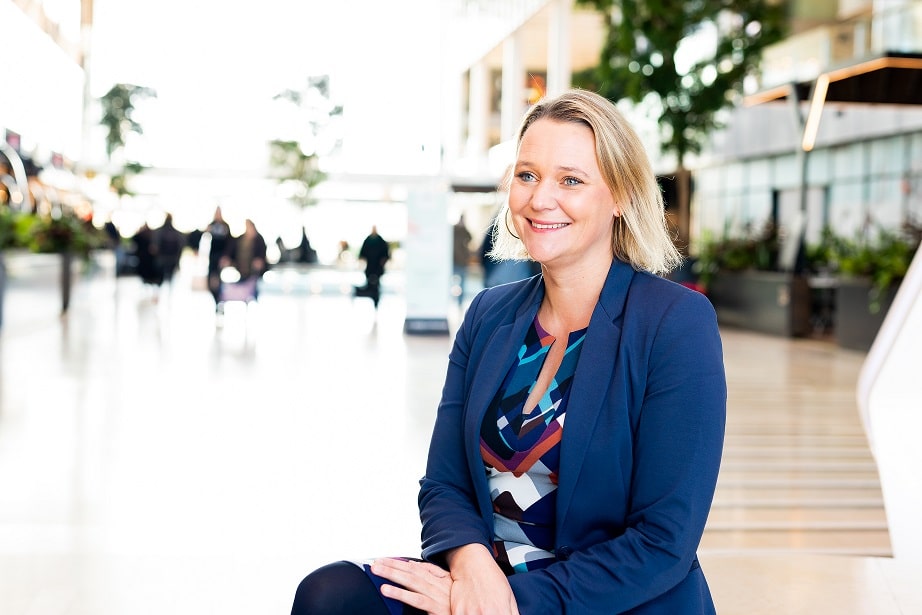
School advice, final test and finding a suitable school. The transition from primary to secondary school is a major process. It is no surprise that parents often call the advice desk of Ouders & Onderwijs about this. ‘Especially at this time, the phone is very busy,’ says director Lobke Vlaming. ‘Parents have questions and want to be involved.’ We discuss the results of our research for the Staat van de Ouder 2022.
Read everything about the Staat van de Ouder 2022 on our theme page.
‘Give children the benefit of the doubt,’ says Vlaming about the first step: the school advice. The primary school determines which education suits the child best. It can give a single advice (for example havo) or a double advice (for example vmbo-tl/havo). ‘In our country, we select quite young and I see the benefit of double advice. You still have more options.’ ‘Secondary schools sometimes pressure to advise children not too high. That is why they sometimes insist on single advice. We find that undesirable, because children are still young and it is often not clear which level is most suitable. Every student deserves that chance.’
Communication
The research also shows that school communication about school advice can improve. 11% of parents did not get the necessary information on time and 19% feel that there was not enough discussion before giving the advice. ‘You can look at this in two ways. Hooray, 89% is well informed, but at the same time 11% is quite a lot. Some parents clearly do not feel heard or involved. If the school pays more attention, it can make a big difference.’ How can the primary school best handle this? ‘We want schools to start informing from group 6 about how they will come to school advice. And in group 7, to have a preliminary talk with parents to give an indication.’ What does that look like? ‘Preferably a reciprocal conversation. So parents are also listened to about how they see their child. But, importantly: also what the child would like. Listen to each other. This way, no one will face a surprise.’
Final Test
When the student has the school advice, the final test follows. If the result is higher than the advice, the school can decide to raise the advice. The research shows this rarely happens. ‘Schools are very convinced of their judgment. However, we see that if schools give these children the benefit of the doubt, in 80% of cases they do not drop levels. Adjusting is often a good idea.’ Vlaming emphasizes that the final test is important. ‘It provides an objective measure alongside the advice. It is good to see at which level the child actually is with a national test.’ But does such a test put too much pressure on children? ‘If you do the test less well, the advice remains. So we should not make the test too important. It is advisable that parents do not train endlessly with their children but see the test as a final step of primary school. Nothing more, nothing less. It depends on how you approach it.’
Suitable School
Once the school advice is set, the real work begins. A suitable school must be found. This can be difficult, mainly when places are drawn or the school offer is limited. ‘It is worrying that in the Randstad we see more draws and shortages of popular schools. Outside that area, there is less choice because the number of schools decreases. That is also a problem because the freedom to choose really is at stake.’ For children with support needs, finding a suitable school is even more complicated. ‘We notice it is very difficult in draws because these children need specific tailored help. And with draws, it is hard to consider that. Extra attention is needed. For example, giving priority to students who need extra support. Then they can choose a school that really fits their support needs and level.’
Different Backgrounds
The research also shows that most parents want their child to go to a secondary school that offers lessons at many different levels. ‘I find it encouraging that parents largely support this. While they want their child to learn at his or her level, they also find it important that students are all at the same school. Subjects like citizenship or gym can then be done together. Especially subjects where the cognitive level is less important and it is very good for students to meet each other.’
Recommendations
The conclusion is that there is still much to improve about the transition. Fortunately, the report of the Staat van de Ouder 2022 has many recommendations. Schools and politics can make real progress. Vlaming sees chances. ‘We really must see it as a task to organize everything better.’
Want to see all figures? Read the complete report of the Staat van de Ouder 2022.
About the Staat van de Ouder
The Staat van de Ouder is an annual publication by Ouders & Onderwijs about what parents think of Dutch education. Every two years, we do broadly representative research on a current theme. The Staat van de Ouder 2022 focuses on the transition from primary to secondary school. Want to know more about the Staat van de Ouder 2022? Visit our theme page.
Parent Panel
If you want to share your opinion about important education themes, you can join the Landelijk Ouderpanel. We regularly do research among parents where you can have your say.

Sign up for our bi-weekly newsletter!
Receive the latest news, tips and experiences.