



Little change yet visible in class from Tailored Education improvements.
For several years, Ouders & Onderwijs has been drawing attention to the problems around Tailored Education. Meanwhile, a political improvement agenda has started. But has anything improved? We asked parents how they now experience Tailored Education. What appears? Parents still give Tailored Education a failing grade. The biggest problems come from too large classes and the lack of expertise in the school. This appears from our newly published Monitor Tailored Education.
Smaller classes and more hands and expertise in the school
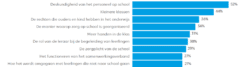
Parents mainly think that classes must be smaller (44%) and that teachers need more support. Nearly half of the parents think that teachers have insufficient expertise (45%) and receive too little help (42%).
More attention to support needed
The cooperation with school gets an average score of 5.6 from parents. Nearly half of the parents think there is enough attention for children with support. It often takes a long time before the support is there. More than half of the parents say it took longer than half a year before their child got extra support at school. More than a quarter of the parents (26%) are still waiting for this support. Remarkably, the larger the class size, the more often parents are unhappy. Yet more than half of the parents are positive about contact with the school. There is enough time for talks and they feel taken seriously by the school. Also, most parents know who they can turn to at school.
“Much is expected from the school, but the resources (enough skilled staff, small classes and budget) are missing.”
Development perspective plan often not present
A Development perspective plan is required when the school provides extra support for a student. Yet this is the case for only 43% of children with extra support at a regular school. Special education scores much higher at 92%. Only 35% of parents have had consultation about the content of the Development perspective plan or have been asked for approval. A worrying signal. Class size also seems to influence this. The more students in a class, the less often parents say there is a Development perspective plan. Half were asked for their child’s opinion and a third said their child could also decide. This can still improve, especially ahead of the legal duty that will come.
Duty of care still poorly followed
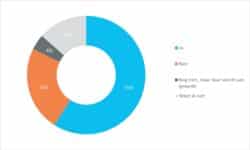
More than half of the parents feel that the legal duty of care of schools is poorly followed. This score has remained the same compared to our previous research, despite all attention. This could be because few schools are available in a region when a child needs extra support (65% say this). This is even more the case in special education. There, 74% of parents experience too little offer and no choice. Also, parents have insufficient information or cannot find it about what support is possible at school. More than one in three parents do not know what support is possible at school and more than half cannot find the information easily.
“There is no Tailored Education for my son at the school he attends. They said they were unsure how to act but did not offer a solution.”
The Partnership Tailored Education
Compared to the previous research, the awareness of the Partnership Tailored Education among parents has increased greatly, from 50% to 79%. Half of the parents say they can contact the Partnership Tailored Education. The awareness of the parent and youth support points is still limited; 9% have heard something about this. Now that every Partnership Tailored Education has such a support point, we hope this awareness will also rise strongly.
What is needed?
Despite all efforts, especially nationwide, this monitor confirms that little has changed in schools. The current education system is under pressure. Classes are full and teachers feel a high workload. There is also a lack of expert support and teachers are not well prepared to teach children who need something extra. A concrete plan is needed that invests in smaller classes, more hands in the class and enough teaching support staff in all schools. These topics, along with learning rights, more flexible forms of education and inclusive education, are our priorities for the coming period.
About the research
In the Monitor Tailored Education, we ask a fixed group of parents about their experiences with Tailored Education. 480 parents took part in the Monitor. All results are in this report. Do you have a child with support needs and do you want to share your experiences with us in the next Monitor Tailored Education?

Sign up for our bi-weekly newsletter!
Receive the latest news, tips and experiences.