



Variation of school times in primary school.
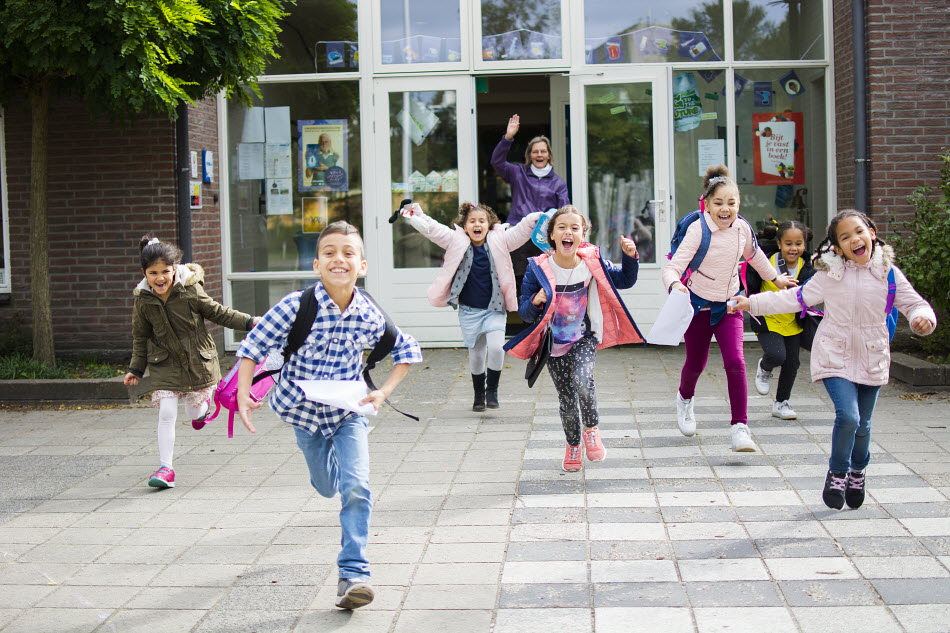
A school day from half past eight to quarter past three is becoming rare. More and more primary schools are moving away from traditional school hours. That is what the education research agency Duo writes in a report.
In the 2011-2012 school year, over three quarters of primary schools started the school day between 8:30 and 8:45 and ended between 14:30 and 15:30. This school year, only 37 percent of schools follow this model. Schools more often use another school time model.
Other models
More than a quarter of primary schools choose the continurooster, and almost a quarter use the five-equal-days model. With a continurooster, students have a short afternoon break, are free on Wednesday afternoon, and schools close the doors at 2:45 pm on other days, while children in the lower grades are free on Friday afternoon. The five-equal-days model has no free afternoons, a short afternoon break, and a daily end time between 2:00 and 2:30 pm.
Causes
The main reason many primary schools switch to other school times is the afternoon break. Often there are no parents or volunteers to guide the children during lunch breaks. Replacing the long afternoon break with a short one means children are supervised all day by their own teacher.
Another cause is that parents often said in surveys they preferred another school time model. Teaching staff also often support change. Teachers spend less time supervising during shorter breaks and shorter school days, so they have more time for tasks outside lessons.
Research
Duo conducted the research by giving a questionnaire to an online panel of 900 school leaders, with a response from about 400. The panel is representative in school size, denomination, and holiday region.
Related Subjects
Teaching time & school time
Children have the right to enough hours of good quality education. This is officially called education time.
Read moreThe school hours of your child: an overview of the options
Every primary school decides its own school hours. Most schools use the traditional school hours.
Read moreContinuous schedule
With a continuous schedule, the lunch break is shorter and children do not go home to eat but have lunch together at school.
Read more
Sign up for our bi-weekly newsletter!
Receive the latest news, tips and experiences.