



Student transport drains vulnerable children.
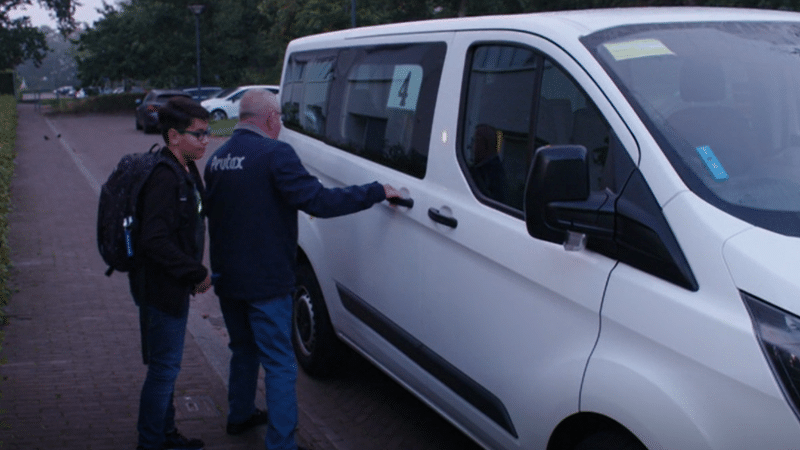
Student transport can be much better. Now trips are often too long, drivers change too often and the situation in the bus is sometimes even unsafe. This causes already vulnerable students to arrive at school exhausted. These are worrying conclusions from a study by Ouders & Onderwijs among more than 500 parents of children who deal with it daily.
Most children of the respondents live close to school: 30% less than 10 kilometers and almost 70% less than 20 kilometers. Yet half of the children travel one to two hours per day and 27% even more than two hours. Travel time takes a big toll on students. Even for relatively short distances the travel time can increase a lot. For example, there are examples of pupils who live less than 6 kilometers from school but still take more than one hour to get there. It is notable that the youngest students have the longest travel times.
Complaints
Parents are most often unhappy about travel time, changing drivers, crowded buses and the quality of the driver. Other issues mentioned are: changing routes, lack of communication, buses arriving late, errors in planning, problems with using a pickup stop and absence of supervision in the taxi bus. Three quarters of parents have filed a complaint, usually at the transportation company (62%) or the municipality (45%). They are far from satisfied with the handling. Often parents hear that it cannot be changed due to staff shortages, or that it is within the guidelines. They are also referred to other agencies.
Severe situations
The severity of situations parents describe is remarkable. This concerns long travel times, many changing drivers and unsafe situations in the taxi bus. Children regularly experience bullying, stress and even aggression and physical violence. Drivers often have little ability to intervene when things go wrong. Some parents say this causes their child to attend school fewer days or even stop going to school.
Recommendations
Based on the results, Ouders & Onderwijs makes several recommendations. The maximum travel time should be greatly reduced, especially for young children. This should be imposed on all municipalities by the national government as a requirement. Furthermore, handling and reporting complaints at both municipalities and transportation companies can be much better. There must also be commitments about fixed drivers with a pedagogical training. The quality of the transport should be central.
For more details, consult the complete report.
About the study
Ouders & Onderwijs conducted the study based on signals received at the Advice Point. The goal was to get a better picture of parents’ experiences with student transport. In total 527 parents filled out the online questionnaire.
Related Subjects
Tackle the (too) long travel time
Parents & Onderwijs thinks that the long travel time for children in special education must be addressed. Our director Lobke Vlaming called for this yesterday in various media, including Radio-1 Journal, Hart van Nederland and NOS-Jeugdjournaal. 'There are many complaints and we get signals about this from all over the country,' said Vlaming.
Read moreLong travel time for many students at special education
Students in special education often spend a lot of time getting to school. A travel time longer than an hour is no exception. 'Many children have already spent a day when they arrive at school' said our director Lobke Vlaming on the Radio-1 news Monday morning.
Read moreStudy about student transport
We do a survey among parents about student transport. It is a topic we get many signals about from parents. Based on the analysis of the experiences, we will talk with, among others, the Association of Dutch Municipalities and the Ministry of Education about possible improvements.
Read moreMeer informatie

Sign up for our bi-weekly newsletter!
Receive the latest news, tips and experiences.