



Willem: ‘Schools must ask themselves what is extra’.
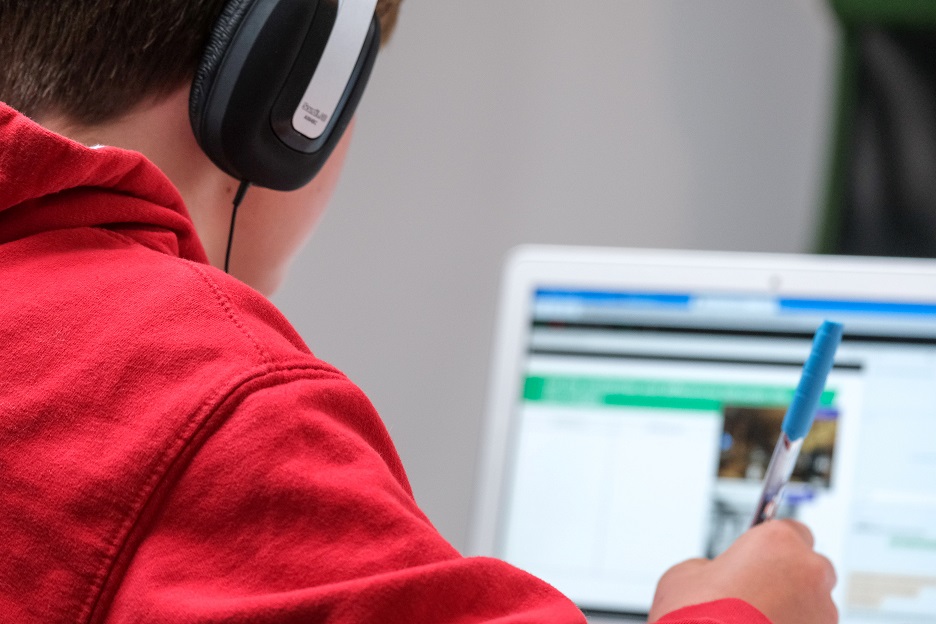
Willem (37 years) is father of three children (6, 4 and 2 years). He is member of the School participation council at the primary school of his two oldest children. Willem works for an organization that delivers laptops via schools to parents of secondary school students. Because of this, he has a lot of contact with secondary schools and parents. He often hears sad stories from parents who cannot or can hardly afford a laptop. Also, he sees big differences between schools in the laptop arrangement for parents and students.
At his children’s primary school, Willem thinks the amount of the voluntary parent contribution is reasonable. ‘Parents pay 27.50 euros yearly for extra activities. I think that is a fair amount. The School participation council agrees with that amount every year. And it is clear to parents that this amount is really voluntary. Children can join all activities.’
Because of the law change for the voluntary parent contribution, all children can join all activities, even if parents cannot or do not want to pay. Willem thinks that is important. He also thinks it is important that schools can keep organizing extra activities. ‘I loved the school trip abroad when I was young. It is so valuable. I want every child to have that.’
Basically, Willem thinks a parent contribution should not be needed. Not at primary school and not at secondary school. ‘Schools should pay for copy and test paper themselves. I am willing to help pay for extras as a parent, but schools should ask themselves what belongs to education and what is extra.’
I think schools should play a bigger role in making Stichting Leergeld and other organizations that help parents with school costs better known.
Ipads
The primary school of Willem’s children requires all children in the upper grades to work with an iPad. Parents can buy this themselves, and if they do not want to or cannot pay, the school provides an iPad. He sees that most parents buy the iPad themselves. This is discussed in the School participation council: the school, for example, includes the purchase of some iPads in its budget.
Willem thinks the school can do more with, for example, the local Stichting Leergeld: ‘That foundation supports parents with low income to buy iPads, but those parents have to find Leergeld first. That is sometimes hard because you do not ask for help for fun. The school can play a role here. For example, by explicitly telling parents about Stichting Leergeld or a municipal arrangement.’
A laptop, obligation or free choice?
As person responsible for customer service and webshop, Willem hears many stories from parents at work. ‘The schools we work with offer parents the chance to order a laptop through our company. There are differences: one school gives parents fairly free choice, and another prescribes the purchase more. It is important that schools cannot force parents to buy a laptop. In practice, almost every parent does, because the laptops given by the school can have fewer functions or be older and some schools do not allow them to be taken home. Also, a first-year secondary student wants his own laptop and not be different from the rest of the class.’
He also sees schools struggle with the freedom of choice they give to parents. His company usually advises schools to choose as few model variations as possible and a solid, functional, and sturdy model without extras. ‘Otherwise, parents or students start competing: who has the most expensive one? That worries children: “Do you not have a touchscreen? I do.” Keep the offer simple, that creates peace in class and no trouble where parents’ money size matters. Prices range from 350 to 850 euros. A lot of money for parents.’
Unexpected costs and stress
Willem continues: ‘Buying a laptop is really a big deal. One child sees it as an early Saint Nicholas gift, but another parent panics when they get the order info. Where do you find 600 euros so quickly? Parents sometimes ask us if we have old models or secondhand ones. At info evenings, I see shame and sadness. That is normal, you want to care well for your child. Every child must join, no matter the parents’ financial position. Luckily, it is a minority in the Netherlands, but those parents do exist.’
‘What is often forgotten is that there are still service and repair costs. Parents and schools often do not count those in the price. We really have to talk about that. Media always talk about purchase costs, but never about repair costs. And those repairs happen a lot in this group. If son or daughter drops the laptop, screen repair easily costs 200 euros. A glass of water on the laptop causes hundreds of euros in repair if there is no insurance. Those unexpected costs cause problems for parents. Their home insurance often does not cover it. Parents have no options because lessons continue and the child needs the laptop every day.
Swedish model, the government provides laptops
What is the best model to offer laptops, according to Willem? ‘I support the model I heard from some Swedish schools. There, the municipality or government gives laptops to students for 3 or 4 years each time. Parents then are responsible for any repair costs and theft. I notice there must be an incentive for parents and children to be careful and responsible with the laptop. It is not disposable. That also applies to students who use the laptop with support from, for example, Stichting Leergeld: no differences in class there either.’
Related Subjects
Question & answer: How does the voluntary parent contribution work?
From this school year, the legal change about the voluntary parent contribution has started. Which costs can the school ask parents for and which not? You will find the answers to the frequently asked questions below.
Read moreLindsey: ‘Important that schools account for parents’ contributions’
Lindsey pays the voluntary parent contribution every year. When she had no money for a while, the municipality helped her with a school cost allowance.
Read moreCampaign ‘School costs: who pays what?’
On saturday 28 august our campaign 'School costs: who pays what?' starts. The consumer program 'Kassa' gives the starting signal. Many parents ask themselves: who must pay these costs? Which school costs are for the school and which for us as parents? Why does the amount of the parental contribution differ so much at different schools? And how voluntary is that parental contribution actually?
Read moreCall: compensate digital learning tools
Not every child has a laptop or tablet available, while this is expected at many schools. In many cases, a laptop or tablet is essential for following education or doing homework. Parent organizations call on the House of Representatives to make laptops and tablets available free of charge for all pupils.
Read more